

Olive Oil Mashed Potatoes (No Butter, No Cream)
This post may contain affiliate links. Please read my disclosure policy.

I grew up on my mom’s mashed potatoes — Russets beaten in a stand mixer with loads of melted butter and scalded whole milk, so light and smooth they were practically clouds on a fork. I have zero complaints about that recipe. But when a few people in my family developed sensitivities to dairy, I had to figure out something that could hold its own at the same table.
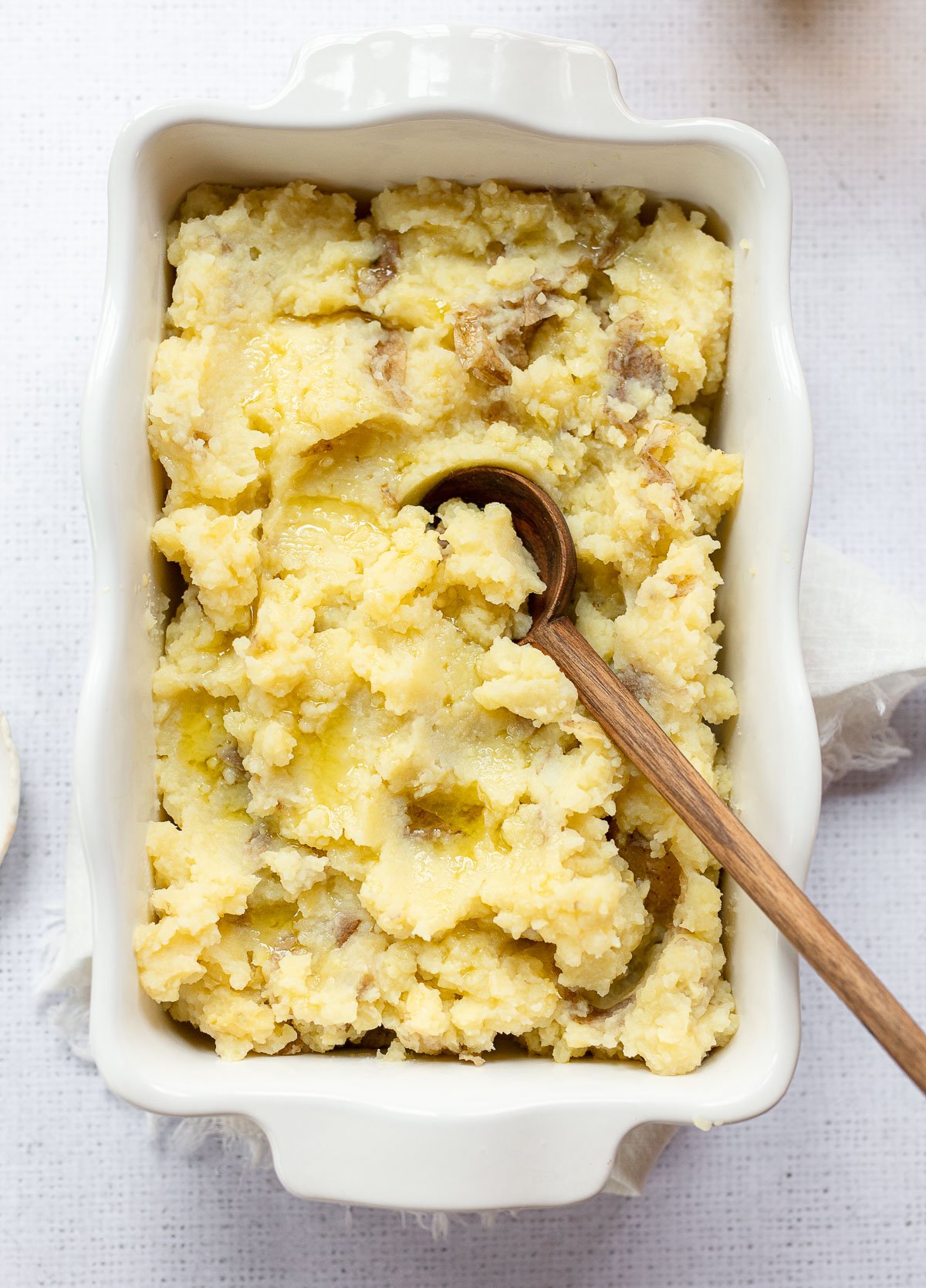
Why this recipe works
- Yukon Golds, not Russets. Their naturally waxy, higher-moisture flesh gives you a creamier mash without needing lots of butter to fill the gap. Russets are fluffy and dry — which is great for butter-based versions, but works against you without dairy ingredients.
- The cooking water is doing real work. It’s loaded with dissolved potato starch, and since it’s already well-salted, it’s flavorful. A splash of it emulsifies with the olive oil to give you a cohesive, creamy texture, not watery.
- Salt the water like you mean it. Three tablespoons in a large pot sounds like a lot. It’s not. That’s how the potatoes get seasoned all the way through, not just on the surface. Under-salted cooking water is the most common reason mashed potatoes taste flat.
- Mash by hand, not machine. A food processor turns hot potatoes into library paste — the starch cells rupture and you lose all texture. A hand masher or ricer keeps them light and gives you control over how smooth or chunky the final result is.
- Make-ahead friendly. These reheat better than butter-based mashed potatoes, which tend to stiffen and separate. Covered and refrigerated up to 5 days, they come back to life in a 350° oven without needing anything added.
Why olive oil works where other substitutes don’t
I tested the obvious substitutes: Oat milk, almond milk, vegan butter, chicken stock, coconut milk. Every version tasted like it was reaching for something. The flavor was off in ways that were hard to pin down but impossible for me to ignore.
What finally worked was much simpler. Yukon Gold potatoes cooked in aggressively salted water, mashed while still steaming hot, with good extra-virgin olive oil and a splash of their own starchy cooking water. That’s it. No substitutes, no workarounds — just potatoes that taste deeply, purely of themselves, with olive oil doing exactly what butter was doing all along: adding richness, body, and a clean finish. These replace butter and cream entirely, and they don’t taste like a compromise.

Cut the potatoes into large chunks rather than cooking them whole — they cook faster and absorb more of the well-salted water. 
Don’t pour this down the drain. The starchy, well-salted cooking water is what emulsifies with the olive oil to give you a cohesive, creamy texture. 
Mash while the potatoes are still steaming hot — that’s when the olive oil absorbs most evenly and the texture stays light.


Masher or ricer — the tool changes everything
- I like to keep the skin on for extra flavor and a rustic feel, so I usually coarsely mash them with a handheld potato masher for a soft but chunky texture.
- If you enjoy a smoother mashed potato texture, peel the potatoes before cooking. Once they’re cooked, puree them with a potato ricer or food mill, or put them in a stand mixer and beat until smooth.
What to serve with olive oil mashed potatoes
- They’re substantial enough to add to a holiday table — a natural for Thanksgiving alongside roasted brussels sprouts or green beans with toasted almonds.
- For a weeknight pairing, try them under the lemony pan sauce in homemade chicken piccata — the sauce soaks right in.
Olive Oil Mashed Potatoes (No Milk, No Butter)

Ingredients
- 2 ½-3 pounds (1.15 kg) small Yukon or yellow waxy potatoes
- 3 tablespoons (45 g) kosher salt or flaky sea salt, plus more to taste
- 5 quarts (4.75 l) water
- ⅓ cup (80 ml) extra-virgin olive oil, plus more for serving
Equipment
- 6 quart or larger pot
- Potato masher or ricer
Instructions
- Prep the potatoes: Wash them, and trim off any eyes or damaged skin. Peel if you prefer smoother mashed potatoes. Slice them so they're all about the same size, about 2-inches in diameter. Leave them whole if they're golf-ball size.
- Put the potatoes in a large pot of water and add 3 tablespoons of the salt. Bring to a boil, then reduce the heat to a simmer. Cook until the potatoes are fork tender, but not falling apart, 20-25 minutes.
- Scoop out 2 cups of the cooking water, then drain the potatoes and transfer to a large bowl. Pour the olive oil over and 1 cup of the cooking water. Mash them with a handheld potato masher, adding more water a little at a time until the potatoes are the texture you like (you might not use all the water). Taste and add more salt, if desired.
- Serve warm, drizzled with additional olive oil.
Notes
- Mashed potatoes can be refrigerated up to 5 days.
- To reheat mashed potatoes: Place in a covered baking dish and heat at 350 degrees until hot, about 25 minutes. Or microwave on high power 2-5 minutes depending on serving size.
Nutrition per serving
Nutrition facts are calculated by third-party software. If you have specific dietary needs, please refer to your favorite calculator.
made these last night and they were perfect!