

The Only Marinara Sauce You Need — Made from Canned Tomatoes
This post may contain affiliate links. Please read my disclosure policy.

Marinara has one job: taste like tomatoes. Not cooked-down concentrate, not jarred herbs, not a sauce that simmered while you were doing other things. Just tomatoes, olive oil, garlic, and basil. It’s quick cooking and bright tasting — exactly what this recipe is.

Marinara is not a ragù — that’s a different sauce entirely, one that simmers for hours with meat and builds a deep, concentrated richness. Marinara stays light on its feet: it cooks in 20 minutes, with four ingredients. Done.
What makes marinara marinara — and why a short cook time is the point
Most tomato sauces labeled marinara are actually slow-cooked — which isn’t wrong, but it’s not authentic. Real marinara is a Neapolitan technique: short cook time, and tomatoes that stay fresh-tasting rather than cooking down into something sweeter and heavier. Raw garlic cooks for seconds, not minutes. The basil goes in at the end, not the beginning. Every decision is in service of one thing — a sauce that tastes like fresh tomatoes, not like it’s been on the stove all day.
The ingredients that make this sauce

- Tomatoes for marinara: I grew up in an Italian family and have been testing canned tomatoes since forever. Good canned tomatoes are the foundation — whole peeled, or packed in thick purée — but please, not diced. Diced tomatoes are treated with calcium chloride to hold their shape, which means they never fully break down into a sauce, plus they’re packed in water, which makes a diluted sauce. Whole tomatoes in puree or crushed tomatoes give you a sauce with real body. I skip tomato paste entirely: it’s a concentrate ideal for long-simmered sauces, and marinara isn’t that. You want the tomatoes to taste like tomatoes.
- Garlic: Fresh, and you only need 3-4 cloves max — marinara isn’t aglio e olio. Grate it on a rasp grater or chop it fine so it melts into the oil rather than float in the sauce in hard chunks. And don’t let it brown — even 30 seconds too long will make garlic bitter, and you can’t go back from that.
- Onion: A half cup of finely chopped onion, cooked covered over medium-low heat, steams soft in just a few minutes and builds a sweetness into the base that you’d never get from opening a jar and dumping everything in at once.
Make marinara sauce while the pasta boils

1. Cook the onions covered over medium-low heat until completely soft, about 5 minutes. 2. Stir in the garlic and cook just until fragrant, about 30 seconds.


3. If using canned whole tomatoes, you can crush them roughly with your hands, with a potato masher or food mill. 4. Add the tomatoes, salt and pepper to the pot and stir. Simmer about 15 minutes. The sauce will bubble and splash, so partially cover the pot to keep your stovetop clean.


5. Stir in fresh sliced basil and taste — if the sauce tastes sharp, a pinch of sugar is all it takes — different canned tomato brands vary in acidity. The sauce is ready to serve with cooked pasta, or transfer to a jar or leakproof container and refrigerate or freeze.

What to serve with marinara sauce
The classic answer is pasta — rigatoni, spaghetti, anything with enough surface area to hold the sauce. But marinara is also the base for puttanesca sauce, which takes about five more minutes and a handful of pantry ingredients. Spoon it around baked chicken and orzo with mozzarella before it goes in the oven, or make a big batch of Italian meatballs and let them finish cooking right in the sauce — the meat juices go back into the pot and the whole thing tastes like it took all afternoon.
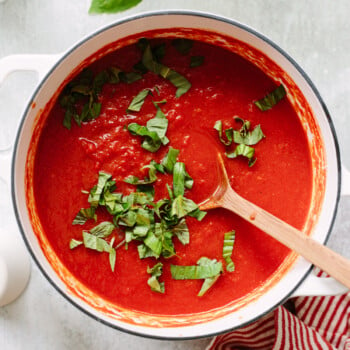
The Only Marinara Sauce You Need — Made from Canned Tomatoes

Ingredients
Yield: 5 cups sauce, enough for 2-3 pounds pasta
- 2 tablespoons (30 ml) extra virgin olive oil
- ½ cup finely chopped onion, about ½ of a medium-large onion
- Kosher salt
- 2-3 finely chopped or grated garlic cloves
- ½ teaspoon crushed red pepper
- 2 28-ounce cans whole peeled tomatoes, or crushed tomatoes
- ½-1 teaspoon freshly ground pepper
- 1 teaspoon sugar, optional
- ¼ cup sliced fresh basil
Instructions
- Put 2 tablespoons extra virgin olive oil and ½ cup finely chopped onion in a large saucepan or Dutch oven and place over medium-low heat. Stir in a pinch of salt to encourage the onion to release liquid.
- Cover the pan and cook gently until softened, 5-7 minutes — the steam created in the covered pot helps this process go a bit quicker. Stir in 2-3 finely chopped or grated garlic cloves and cook a few seconds, until fragrant. If using crushed red pepper, stir it in.
- Stir in 2 28-ounce cans whole peeled tomatoes, 1-½ teaspoons salt, pepper and sugar (if using) to the pot. Bring to a simmer. Cook 15-20 minutes. The sauce will bubble up as it simmers. Partially cover the pot to keep it from splashing on your cooktop.
- Taste the sauce for seasoning (I usually add about another ½ teaspoon of salt) and stir in the basil.
Notes
- The sauce keeps refrigerated up to one week and frozen up to 2 months in leakproof containers.
- If you prefer a smoother sauce, swap out the tomatoes for finely chopped tomatoes or tomato puree. You can also use a handheld stick blender to create your desired consistency.
- Optional seasonings: Add about 1 teaspoon dried oregano and crushed red pepper to taste for that classic Italian restaurant aroma and zest. Butter isn’t traditional, but it adds a rich flavor. Stir in a tablespoon or two into the hot sauce until it melts.
Nutrition per serving
Nutrition facts are calculated by third-party software. If you have specific dietary needs, please refer to your favorite calculator.
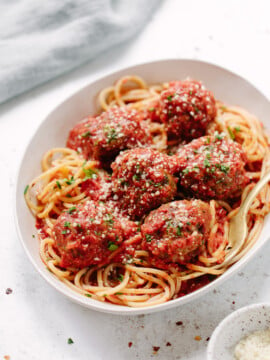
This is my favorite recipe for meatballs. My family loves this. I’m going to try a few more of your recipes- thanks so much for sharing.
Love this recipe! It’s a keeper. So much flavor and so easy to make!
Rosie, thank you! Those meatballs look amazing with it — a perfect pairing! 🍅
Simple yet delicious,
So basically I follow this same recipe, but my grandmother said to take the onions and garlic out after that is done. I asked why and she said is to flavor the pot. So then I add all of the same things plus one bay leaf and a pinch of pickling spice. It was my grandmother‘s neighbor’s recipe from where she was from in Sicily.
I love this. Especially how our Italian immigrant ancestors used their instincts to cook simple food, their way. Thank you so much for sharing!
I’m going to try your meatball recipe (my grandsons love meatballs) and your quick marinara. My question is: Can I add mushrooms to your recipe? I like sauces with mushrooms, peppers, and random available veggies but the kids don’t like all that. Also my son in law really likes mushrooms. Any suggestion to have both a simple sauce with the meatballs but also lots of mushrooms?
I really liked your step by step instruction with photos above.Excellent. I can’t rate yet till i try it though.
Hi Susan – Try my recipe for mushroom bolognese sauce! I think it would be great with the meatballs. Come back and let me know 🙂
do you have Salmon recipes?
Hi Kate – Yes! You can find my favorite baked salmon recipe here and salmon with maple Dijon glaze
This is a perfect go-to thanks. Ngl though it lasts more like 2 weeks in the fridge if covered tightly! Lol don’t judge it was a great soup base when I needed it. 🫣
My Mom always added a couple of meaty pork ribs to her basic marinara. IS that something you agree with?
Delicious and so easy to make. I made half the recipe and used whole tinned tomatoes. Used my stick blender to puree. It turned out great on our spaghetti squash dinner.
Looks like an awesome recipe definitely going to make it today thank you Karen for sharing!! 😉👌💯