Butternut Squash Pasta with Crispy Sage
This post may contain affiliate links. Please read my disclosure policy.

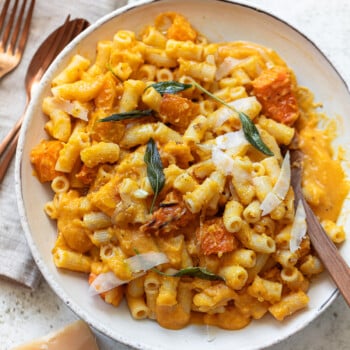
This butternut squash pasta is creamy, without a drop of cream — roasted squash blended with caramelized onion, butter and Parmesan is all it takes to make a velvety and deeply savory sauce. A handful of fresh sage leaves go into the oven with the squash and come out crispy, which is the detail that makes this dish worth making over any other butternut squash pasta you’ll find.

The texture makes the difference
- The thick sauce is cream-free: Blending the roasted squash with butter, Parmesan and a splash of warm broth is what gives the butternut squash pasta sauce its rich, creamy texture. If you want a creamy, garlic-forward version instead, my roasted pumpkin pasta has all that.
- Two textures, on purpose: I reserve about a third of the roasted squash before blending — those chunks go back to the finished pasta along with the crispy sage, so every bite has something to contrast with the smooth sauce.
- Easy to make ahead: Make the sauce up to a week ahead and refrigerate it. When you’re ready to serve, cook fresh pasta and toss with the reheated sauce.
Three ingredients that make the dish
- Butternut squash: The sauce is a simple puree of roasted butternut squash. Roasting the squash instead of steaming or sautéeing it intensifies its natural sweetness, adding deeper flavor. Tip: If you’re starting with a whole squash, you want to end up with 5 cups of peeled, seeded butternut. Using my kitchen scale when I tested the recipe, I found that a 3-pound-ish squash is the ideal size. You can also use prepped butternut squash, often found in the produce department in grocery stores.
- Sage: Fresh sage is a sturdy, assertive herb with a slightly eucalyptus flavor note — nothing like the dusty potpourri flavor of the dried version, which won’t do anything useful in this recipe. I toss the whole leaves into the oven with the squash at the 15-minute mark, not from the start — just enough time for them to turn crisp at the edges without burning.
- Pasta: Short dried shapes are the one to use — such as shells, rigatoni, or cavatappi. The sauce will collect inside the nooks and ridges in the best way.
Roast, puree, and toss the pasta
- Note: If you need help breaking down a whole butternut squash, see my step-by-step instructions for cutting up a butternut squash.

1. Toss cubed butternut squash and olive oil on a rimmed baking sheet with sliced onion (or shallot), crushed red pepper, black pepper and salt. 
2. Roast 15 minutes, then add the sage leaves and garlic — adding them now prevents the garlic from burning and gives the sage just enough heat to crisp without burning. 
3. Return to the oven and roast until the squash is fork-tender and the onion is deep golden at the edges.


4. Set aside 1-1/2 cups of the roasted squash. Puree the rest in a food processor or blender with butter, warm vegetable broth and grated Parmesan. 5. Add more broth or pasta cooking water a splash at a time and blend until the sauce coats a spoon but still flows — think heavy cream consistency. 6. Toss the cooked pasta with the sauce and reserved squash chunks, then transfer to a serving bowl. Finish with Parmesan and the crispy sage leaves.


- Want to add some protein? Crumble a few crispy prosciutto chips or cooked crumbled bacon over the top just before serving. The saltiness plays well against the sweet squash, and the crunch adds even more texture to the pasta.
- If you’re having a deep butternut squash moment, butternut squash risotto is worth a bookmark.
Butternut Squash Pasta with Crispy Sage

This butternut squash pasta is creamy, without a drop of cream — roasted squash blended with caramelized onion, butter and Parmesan is all it takes to make a velvety and deeply savory sauce.
Ingredients
- 5 cups (625 g) peeled butternut squash cut into 1-½-inch cubes
- ½ cup sliced yellow onion, or shallot
- ¼ cup extra virgin olive oil
- Kosher salt
- ½ teaspoon crushed red pepper
- ½ teaspoon freshly ground black pepper
- 2 cloves finely chopped garlic
- ¼ cup fresh sage leaves, or 1 teaspoon dried sage or thyme
- 2½ cups vegetable broth, warmed
- ¼ cup grated Parmesan cheese, plus more for serving
- 2 tablespoons butter
- 12 ounces dried short pasta, such as rigatoni, shells, or ziti
Equipment
- Food processor or blender
Instructions
- Preheat the oven to 425F(220C), with the oven rack positioned in the center.
- Toss 5 cups peeled butternut squash cut into 1-½-inch cubes on a rimmed 18 x 13-inch baking sheet (lined with parchment, if you like) with ½ cup sliced yellow onion, ¼ cup extra virgin olive oil, 1 teaspoon salt, ½ teaspoon crushed red pepper, and ½ teaspoon freshly ground black pepper. Arrange in one layer. Roast 15 minutes. Add 2 cloves finely chopped garlic and ¼ cup fresh sage leaves, and stir the squash around. Continue roasting 10-15 more minutes, or until the squash is tender and the onion is browned on the edges.
- Scoop out 1 ½ cups of the roasted squash mixture from the sheet pan and set aside in a small bowl. Scrape the remaining squash, sage leaves and all the pan liquid into a food processor or blender. Add 2 cups vegetable broth, ¼ cup of the Parmesan and 2 tablespoons butter. Puree until the sauce is completely smooth, with a thick, pourable texture. Add additional broth as needed. Keep the sauce warm while the pasta cooks.
- Bring 4-5 quarts of water to a boil in a large pot, then add 2 tablespoons kosher salt. Cook the pasta until al dente and drain. Transfer to a large serving bowl.
- Add the sauce to the pasta, along with the reserved roasted squash. Serve hot, with additional Parmesan cheese.
Notes
- Use precut squash from the produce department of your grocery store to cut down on prep time.
- One medium-large (2-1/2-3 pounds) butternut squash should yield 5 cups of peeled, seeded cubes, to yield approximately 3 cups of sauce.
- The sauce and roasted squash cubes can be made up to 5 days ahead and refrigerated. While the pasta is cooking, reheat the sauce and squash mixture in a saucepan on the stovetop over medium heat.
- Frozen butternut squash works in a pinch — spread it on the baking sheet (not thawed) and add 10 minutes to the roasting time. It won’t caramelize as deeply as fresh, but the sauce will still be creamy and flavorful.
Nutrition per serving
Calories: 565kcal Carbohydrates: 90g Protein: 15g Fat: 17g Sodium: 722mg Fiber: 7g Sugar: 9g
Nutrition facts are calculated by third-party software. If you have specific dietary needs, please refer to your favorite calculator.
Tried this recipe?A star rating takes 5 seconds and helps more people find it.