

Foolproof Lemon Aioli Recipe
This post may contain affiliate links. Please read my disclosure policy.

No need to buy store-bought when you can make this homemade aioli recipe that’s even better! Use this tasty pantry sauce on everything from sandwiches, seafood, and salads. Homemade aioli tastes a world apart from store-bought jarred mayo, and you can whip it up in seconds in a blender.
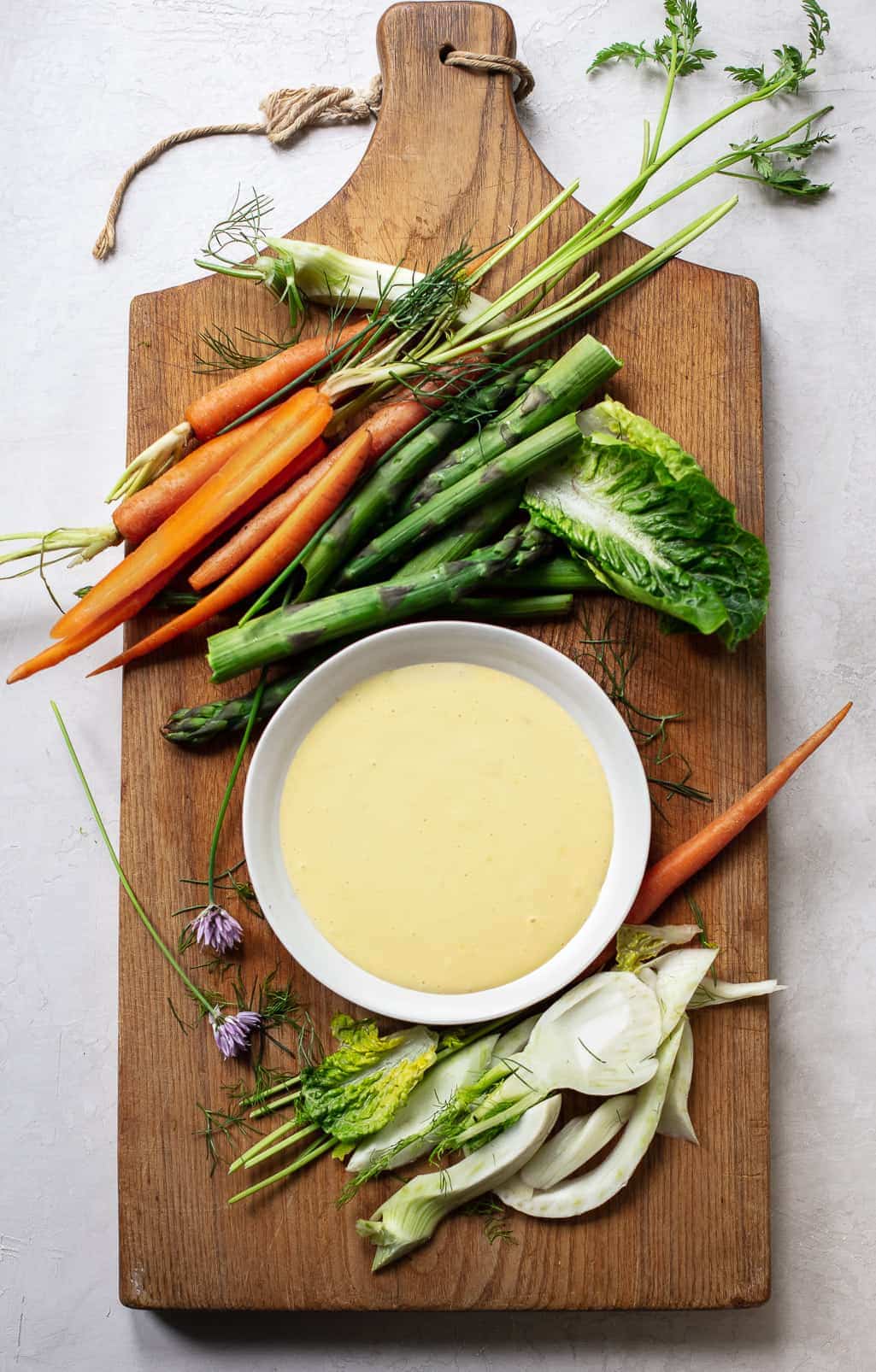
I love making homemade versions of my favorite condiments, especially when they’re homemade sauces that make any dish even better. Creamy lemon aioli from scratch is one of them. Garlic aioli, lemon mayonnaise, or mayo — whatever you choose to call it — is a magical creamy sauce with a bright, lemony tang and a savory garlic flavor.
Lemon aioli fits in the same category as mayonnaise, that basic condiment just about everyone has in their fridge. How is the homemade version different from the stuff you get from a jar? While aioli is an egg-based sauce just like mayonnaise, they differ because aioli contains garlic and mayonnaise doesn’t.
Karen’s ingredient notes
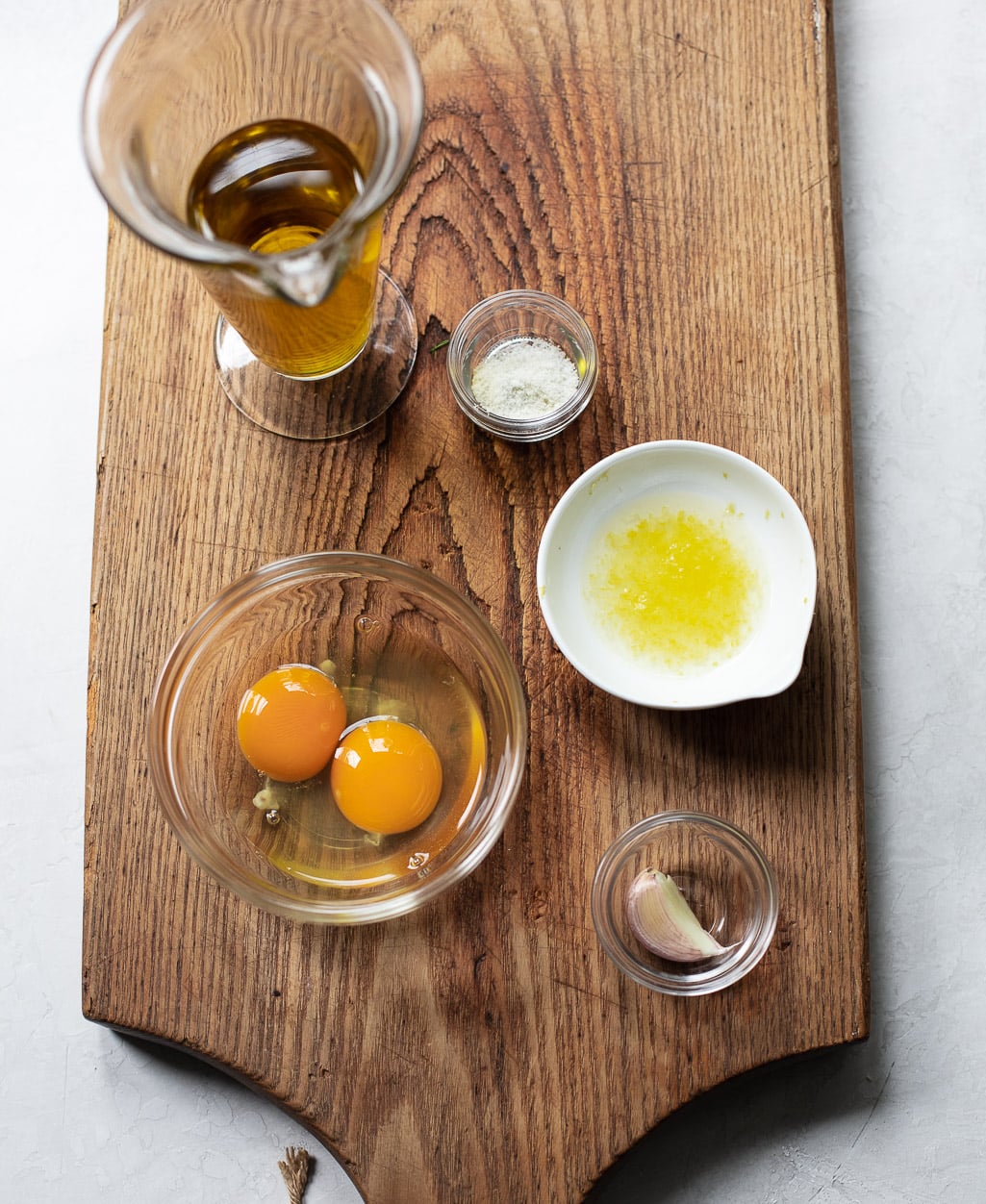
- Eggs: You’ll need 1 whole egg and 1 egg yolk
- Oil: For the best balance of flavor, I recommend using a mixture of good extra virgin olive oil and a neutral vegetable oil.
- Garlic: Use fresh garlic! It’s the backbone of aioli.
- Lemon: A double whammy of fresh lemon juice and lemon zest adds bright acidity and tang.
- Salt: Fine sea salt or kosher salt, although fine grain salt will dissolve and incorporate best.
Why not dress up the everyday food you go to the trouble of cooking at home? Even if it’s a plain and simple burger, topping for succulent baked salmon, a baby potato salad with garlicky lemon aioli or a platter or crusty roasted potatoes that you’re serving, a delicious sauce can be a game changer.
Blender method
You can emulsify eggs, oil and acid by hand, but it does takes a bit more time and elbow grease. On the other hand, aioli made in the blender or immersion blender is just about foolproof.
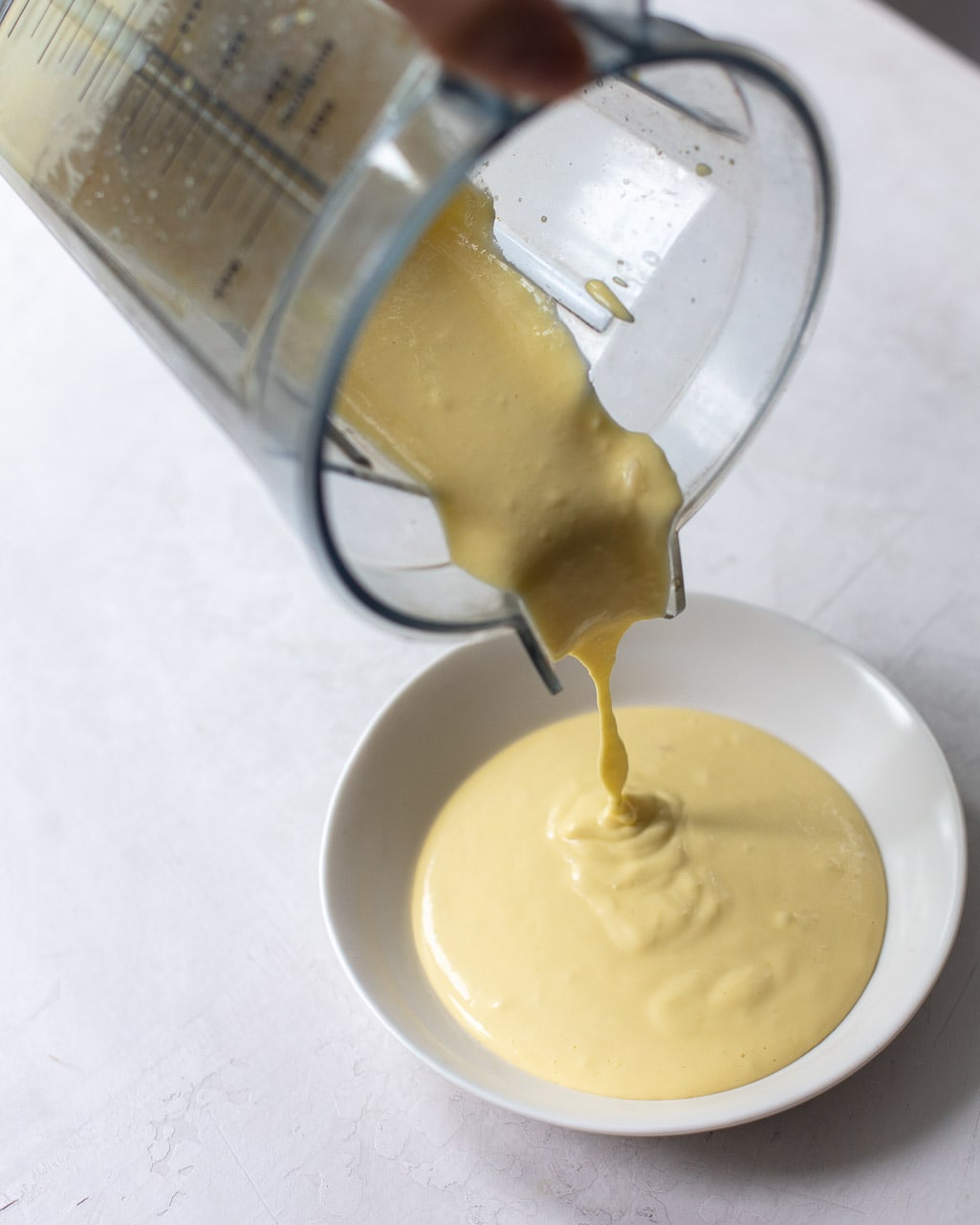
The sauce comes together in seconds and is especially light and lofty, which is why I prefer to make it that way, even over a food processor.
It helps to use a high-powered blender to make a super creamy emulsion, but you don’t need to get fancy. Any decent solid blender with variable speeds will work.
Tips and tricks
- Use a blend of oils. A mix of neutral vegetable oil blended with some fine extra-virgin oil makes an aioli with a nicely balanced flavor. I love extra-virgin olive oil on everything from pasta to dessert, but find that aioli made with 100 percent EVOO can taste too strong.
- Drizzle the oil into the blender in a slow, steady stream of droplets — this is the magic step to making an emulsion that doesn’t break.
- Use super-fresh eggs. Pro trick: Want to know the “secret” to finding the freshest supermarket eggs? Check the three digit code on packaged eggs (not the sell-by date)! It counts up from January 1 (001) to December 31 (365). So a package of eggs packed on May 15 would be stamped “135.”
- Don’t be shy about tasting and seasoning your aioli. The ingredient list is short, and tweaking your aioli with salt and lemon juice will make all the difference.
- If your aioli turns out too thick, whisk in a few drops of cold water to make it creamier.
Personalize your seasonings
Plain aioli is stellar smeared on a sandwich or as a dip, but it’s a snap to change up the seasonings in the basic recipe and make it your own. Here are some ideas:
- Smoky Chipotle Aioli: Add 1 or 2 canned chipotle peppers in adobo sauce to the blender after drizzling in the oil, then blend on low until pureed.
- Dijon Aioli: Add 1 tablespoon Dijon mustard with the eggs.
- Sriracha Aioli: Stir in 2 or 3 tablespoons sriracha sauce (or to taste) to the finished aioli.
- Fresh Herb Aioli: Add a few tablespoons of fragrant tender herbs to the blender before adding the oil – try fresh chopped tarragon, chives or basil.
- Cilantro-Lime Aioli: Use grated fresh lime zest and lime juice instead of the lemon, and 2 tablespoons chopped cilantro.
- Roasted Garlic Aioli: Omit the raw garlic clove and blend 3 or 4 cloves of roasted garlic instead.
- Pesto Aioli: stir a tablespoon or more prepared pesto into the aioli.
Homemade Fresh Lemon Garlic Aioli

Ingredients
- ½ cup (125 ml) neutral vegetable oil, such as avocado or canola
- ¼ cup (60 ml) extra-virgin olive oil
- 1 whole egg
- 1 egg yolk
- Grated zest from 1 lemon
- 1 tablespoon fresh lemon juice, plus more to taste
- 1 large or 2 small garlic cloves, smashed and peeled
- Fine sea salt
Instructions
Yield: About 1 cup aioli
- Combine the oils in a small container with a pouring spout, such as a measuring cup.
- Put the egg, egg yolk, lemon zest, juice, garlic and 1/2 teaspoon salt in a blender. Blend the egg mixture on medium speed for about 15 seconds.
- Increase the speed to high and start pouring the oil into the blender in a slow, steady stream. Continue blending until all the oil is incorporated and the mixture is thickened.
- Taste for seasoning and add more lemon or salt if you like.
- Transfer to a jar or other container and use right away or refrigerate up to 5 days.
Notes
- The aioli keeps in a covered container in the refrigerator 3-5 days.
Nutrition per serving
Nutrition facts are calculated by third-party software. If you have specific dietary needs, please refer to your favorite calculator.


Can I use grapeseed oil?
I’m always using olive oil when cooking or sauté my foods, EVOO for salads – I have grapeseed and never use it! Please let me know if I can substitute it for some dishes. Thanks a bunch!
Helen – You can absolutely use grapeseed oil instead of olive oil. It has a more neutral flavor, but that makes it versatile to use for cooking and especially in this aioli recipe where the taste of extra-virgin olive oil can be overwhelming. It’s also good for high-heat cooking like sauteeing and roasting.
Love that you add the nutritional information. I’m probably just missing it, but what is the serving size for the nutritional information? 1 or 2 tablespoons?
Hi Rebecca – Thanks for your comment! The serving size for nutrition info is for one ounce. The recipe yields approximately one cup.
Nice recipe but a little heavy on the garlic. Next time I will cut it to one small clove.
Easy and delicious. Did this with an immersion blender which also worked well.