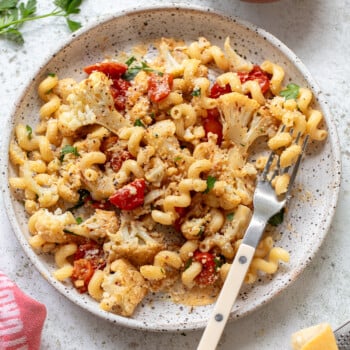
Roasted Cauliflower and Tomato Pasta

Roasted cauliflower pasta, amped up with basic pantry spices (oregano and crushed red chili), fresh garlic, cherry tomatoes, and plenty of olive oil. The pasta sauce is mixed right in the roasting pan, finished with a touch of cream and grated Parmesan cheese that coats the pasta like a velvety blanket.
Equipment
Ingredients
- 1 whole head cauliflower weighing 2-2½ pounds (see note below)
- 8 ounces (225 g) cherry tomatoes sliced in half
- ¼ cup (60 ml) extra virgin olive oil
- 1 teaspoon dried oregano or Italian seasoning
- ½ teaspoon crushed red pepper add more or less to taste
- Kosher salt
- 6 ounces (170 g) dried pasta
- 1 teaspoon grated or finely chopped garlic
- ¼ cup (60 ml) heavy whipping cream
- ¼ cup grated Parmesan cheese
- 2 tablespoons chopped parsley or fresh basil
Instructions
- Preheat the oven to 425 (220C) degrees.
- Cut 1 whole head cauliflower into four wedges. Trim off the stem, keeping some of the small, tender leaves around the head (they taste delicious roasted). Slice the cauliflower into large bite-size florets that are about 2-inches in diameter.
- Put the cauliflower and 8 ounces cherry tomatoes on a 9x13-inch rimmed baking sheet. Add ¼ cup extra virgin olive oil, 1 teaspoon salt, 1 teaspoon dried oregano and ½ teaspoon crushed red pepper. Toss the vegetables around so they're evenly coated with the oil and seasonings. Roast 20 minutes. Carefully remove the pan from the oven and add 1 teaspoon grated or finely chopped garlic, stirring it in with a spatula. Continue roasting 5-7 more minutes, until the cauliflower is tender and the tomatoes are juicy and caramelized on the edges.
- While the cauliflower is roasting, bring a large pot of water to a boil and add a generous amount of salt. Add 6 ounces dried pasta and cook until al dente, about 10 minutes depending on the shape. Scoop out and reserve ½ cup of the cooking water. Drain the pasta and transfer to a serving bowl.
- Remove the sheet pan from the oven and sprinkle 2 tablespoons of the cheese over the vegetables. Pour ¼ cup heavy whipping cream and ¼ cup of the pasta cooking water into the pan. Stir everything around with with a spatula, scraping the bottom of the pan to release any browned bits.
- Tip the vegetables and pan sauce out over the pasta, and stir together to meld. Sprinkle with the parsley and remaining cheese and serve.
Notes
- Pre-prepped cauliflower florets from the produce section work fine. A medium-large head yields about 8 cups (roughly 1¾ pounds) once the stem and core are trimmed.
- Use a quarter-sheet pan (13x9) — it holds the vegetables snugly in a single layer without so much extra space that they dry out and burn at the edges.
Nutrition
Calories: 368kcalCarbohydrates: 36gProtein: 9gFat: 21gSodium: 128mgFiber: 2gSugar: 3g
